Showing posts with label MUST HAVE. Show all posts

Tuesday, 15 January 2013

Judas Priest - Sin After Sin


Ahh, Heavy Metal...
Back when I was a teenager, I was obsessed with heavy metal, it kinda struck a chord with my geekyness and shyness, but looking back on it, I can barely listen to most of it as it just seems rather pointless and pathetic. Like an audio version of Dungeons & Dragons. It seems to get all the geekyness and wrap it in a cloak of manufactured malice, which ends up coming across all futile. However Judas Priest are one of the true exceptions. Formed in the industrial city of Birmingham, Priest started off as a kinda post-psychedelic heavy blues band, their first album, Rocka Rolla, a total delight. It's utterly bleak, without veering into the pseudo-gothic pretentions of which the genre is now associated. By their second album, Sad Wings Of Destiny, Priest had refined their sound into a chugging behemoth, not of the Hawkwind/Motorhead style, but more streamlined, more angry. By this, their third album, the blues element had faded, and what we're left with is kinda like metal's 'year zero', in it's new and fresh sound. But was Sin After Sin the first of the new fast metal, or the end of the post-psychedelic heavies?

The album opens up with Sinner, an epic fast paced monster of a track featuring searing vocals, a steady beat and chugging riffage. The signature Priest sound. Halford's voice still has those bluesy influences during the verses, but when it hits the chorus he's screeching in splendid falsetto form. The song features religious imagery presented in a sci-fi way, while musically it's total heavy metal featuring loads of different sections building up an epic feel, with tremendous playing featuring the kind of energy that left Zeppelin and Sabbath choking in their dust. The middle break features a delicious Hendrix take by the now sadly retired K. K. Downing. This however is not the summer of love, this is ghostly and alien, with Halford over the top with menacing imagery before returning to standard form and a more standard approach guitar solo. The track just then builds up to it's climactic... climax, where Rob Halford's voice just gets higher and punchier. Ouch. It's a killer track and one of heavy metal's defining statements. The next track, a cover of Joan Baez's Diamonds And Rust just kicks right off, with a KISS-like riff. It's a more poppier metal, but it's actually good! It doesn't carry the weight of Joan's original, and so feels rather synthetic, and if done by lesser bands, would come off cheap. Here though it just works and just feels right. It's absurd, but it works as a metal song. Also some of Tipton's lead breaks lay the groundwork for their next album, Stained Class. The third track, Starbreaker is kinda the album's let down. It's really average and just kinda plods along in comparison. It's not that it's a bad track, but it lacks any real energy, and the science fiction themes just float above the track in a sub-moorecock fashion. It kinda shows that this album is solid when a track that is merely 'good' is the let down. Side 1 finishes off with The Last Rose Of Summer. See, even these leather clad bastards have a sensitive side. Unlike say, Poison's 'Every Rose has It's Thorn', this track does not feel like plastic emotions sung in order to get into the girl's (or boy's) trousers. There's a distinct post-psychedelic feel to it, which harks back to my theory, that Priest were really the last of the sixties style bands. It's not a great track here, and lyrically it's kinda clunky, but it's a superb ending to the first side of the record, closing it nicely and not giving you any hint at the barbarism that lays ahead. If the first side of this record is the closing swansong of an ageing music, then the second side is the blueprint for metal.

We start off with an instrumental break, Let Us Prey, pseudo-church guitar harmonies which bleed into Call For The Priest,  a balls-to-the-wall proto speed metal headbanging moshpitting slobberknocker of a track. It's fast, it's heavy, it's aggressive, it's got that steady fast beat. It's just a total fun track, played by superb musicians who must've surely known that they were treading new ground. The Let us Prey harmony returns with Halford now inventing power metal with his warrior-like chants before we get into a lovely duelling guitar section leading into another harmonised part just totally down and to the point. The track races to it's climax, leading to the bluesy depression-soaked rock of Raw Deal, describing Halford's experience in a famous gay bar,. The bass pounds through, the music taking various turns throughout, always coming across as bitterness personified as music. It's not bitterness against homosexuals, as Halford himself is gay, but bitterness at how it had to be kept in the dark, hidden. After describing the act of sex, the track then leads into it's climax, with Rob's screams coming through and then slamming into a post coital disregard for what has happened, in total spite. After the frank openness of Raw Deal, we're taken into Here Come The Tears Taking that psychedelic feeling of The Last Rose Of Summer, but taking it to an emotional nadir. There's no optimism here, no pretence, just unrelenting misery and Halford at his most emotive, whilst it builds up into one of the most soul crushing guitar breaks in the whole genre. Soaked in the damp fluids of the blues without sounding fake like Clapton, this just carries the track through dragging us into a resolution. Through the murky waters of despair into an explosion of emotion, which ends it all... until the next track starts to trickle in, Vague watery dots of music which give no hint at the pure anger and hatred present in Dissident Aggressor, the track that has yet to be supassed interms of metal's barbaric intent. The aggressive outlet of all the emotion that has gone on before it. Halford does not sing so much as shoot the words at you, while the rhythm chuggs along propelling us further forward, the solo not much of a solo as a mess of deliciously sharp noise which penetrates the ears before building up struggling and fighting to survive, building up to a sudden end.

This album is perhaps the only metal album you'll find that I'll mark as a 'MUST HAVE'. Because quite simply, if you've heard this album, then you've heard everything the genre has to offer. Like literally, the genre hasn't really progressed since Sin After Sin's release in 1977. Whilst Iron Maiden may have streamlined the music to it's purest form, they never take it further, and likewise the more 'extreme' areas of metal, such as black and death, are essentially Deep Purple with extra shouting.
This LP is also an example of how clever track positions make an album. the whole of the second side is set up to just bring you to an emotional peak, with anger, bitterness and sadness leading into sheer brutality. Whilst metal is seen as something of an embarassment in the music world, I have no problem admitting that I just really enjoy this record.

Monday, 13 August 2012

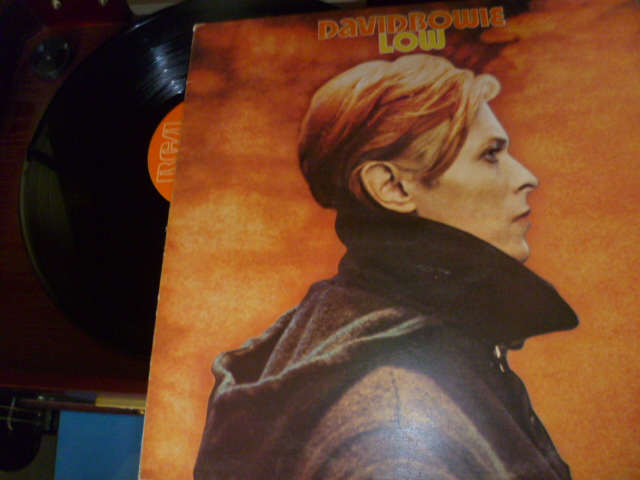
David Bowie - Low


Low was a real watershed moment for popular music, would electronic music really work on a mainstream audience? Critics were confused, even his record company refused to let it count as part of his contractual obligation, yet it caused a storm on it's release, and ushered in a new age of a new kind of music, electronic pop. Low is one of the greatest and most important albums ever released, born out of desperation and alienation, it is Bowie's definitive artistic statement, and although many people consider it's follow up, Heroes, to be the better album, they're wrong. Heroes expands on what Bowie achieved on Low, and combined it with his more familiar sound, songs were fuller and more formed, but on Low, we had pure emotion. Snippets of information presented to us, lyrics presenting us with the essential facts and nothing more. A sense of bravery and experimentation flows throughout. This is the start of Bowie's 'Berlin Trilogy', and what a way to kick it off!

Bowie was at his end, having just starred in The Man Who Fell To Earth, he was addicted to cocaine and alcohol, he was empty and stressed, his marriage was in ruins and his career was over. Moving to Berlin with Iggy Pop in tow, to escape from his vices and renew himself, Bowie fully submerged himself in the Krautrock scene, Kraftwerk, Can, Neu! and so forth, and this was to inform his last chance, creating an album that's natural yet synthetic, inwardly depressive yet optimistic. With weird stories involving conflicts and confusion with his band, and a collaboration with the artistic Brian Eno, this album really shines and is in some respect a miracle. Mojo magazine has done numerous articles on the creation of and background to Low(including one in this month's issue!), so I'll leave it at that, and go just review the album. As you may have already guessed, I really like it!

Side A is mostly conventional music, starting with the instrumental Speed Of Life,  a motorik beat, repetitive rhythm, and a lead guitar really take us into alien territory, the lead synth gives us a hopeful melody. This is a decent upbeat song, combining Bowie's pop sensibilities with a noticeable Krautrock influence. The short and sweet nature really contrasts with the opening song of his previous album, Station To Station. A funky yet robotic bass guitar and an almost out of tune guitar take us into the second track, Breaking Glass, with lyrics inspired by a fight Bowie got himself in, we're told a story in snippets, and an acknowledgement of his own flaws. We get a neat synth sound throughout in places. It's a great, short, well written song which fades out, taking us into What In The World. With lyrics about 'a little world with grey eyes', this sounds the most 'Bowie' track on the album, with some great guitar, and the repetitive motorik beat still carrying on. The lyrics tell a story, yet still feel somewhat abstracted, and some occasionally out of time singing overlapped works brilliantly.

The hit single Sound And Vision takes us in with a pleasant guitar riff, funky bass and the same motorik drum beat. In true Krautrock style, it opens with an extended instrumental section, synth patterns and so on. It's a very upbeat piece involving sometimes undecipherable lyrics. He starts singling with the chorus and we're treated to some true abstract lyrics, this song is perhaps the true turning point on how the music is lifting out of his solitude and into a new world of colour and optimism. The next song is Always Crashing In The Same Car, which like Breaking Glass, is a very straightforward lyrical theme. Again, the same motorik beat, and some nice lead guitar work, some bubbling synths in the background over an instrumental section. Bowie really lets the groove work itself out here, the upbeat music contrasting his rather subdued and melancholy singing, but it just really works out. The solo is excellent in the psychedelic/prog style, really fitting into place. Next Bowie asks someone to Be My Wife, a cry for help during his fractious marriage which is disintegrating before his very eyes. The guitar is distorted and out of tune, the beat the same as before, the music dramatic. Our man's isolation and loneliness really comes out here, showing a search for belonging, a quest for love. A romantic way of dealing with a gruelling divorce case.  Again the guitar solo really kicks it in the bag, with equal melancholy and upbeatness. The first side ends with the instrumental A New Career In New Town, opening up with a sombre beat, and ghostly synth chords, it then kicks it up a not, bringing back the motorik beat from before, an upbeat melody and a true uplifting feel, Bowie is crawling up from the depths of desperation. As the title suggests, this instrumental track represents the new found hope he felt during his move to Berlin, and his adoption of a more electric style, free from the excesses of conventional rock. There's hints of Kraftwerk and Neu! on this track. Notably, the studio this album was recorded in was situated opposite Kraftwerk's legendary Kling Klang studio. The track fades out into upbeatness. A thoroughly enjoyable first side, nice upbeat music, and a real solid drumbeat throughout.

Side B opens with Warszawa, a track which inspired Joy Division so much that they were initially called Warsaw (Spandau Ballet were also so enamoured with this album that their name comes from an area of Berlin). starting with a moody piano beating over a subtle synth, the track opens up with a haunting melody reminiscent of Wendy/Walter Carlos' Clockwork Orange soundtrack. The piano beat becomes more synthy, emphasising a sense of isolation and yet wonder at the newly developing futuristic landscape, it's exploration not just of music, but of this brave new world. It's a sad track, and it allows itself to fully develop and emotional feeling throughout. Yes, it's sad, but it's a bittersweet sadness, one laced with silent hope. This side of the album is the one which really changed popular music, combining Brian Eno's idea of musical soundtracks for visions, with Bowie's amazing writing abilities, music of the most experimental nature! The track cools down, leading Bowie into some tribal style chanting over this haunting beat, suggesting a future world. The melody slows right down before returning to it's main motif, that of exploration. I close my eyes and this track brings forth visions of steel and glass, a clinical clean world of magic. The next track is Art Decade, featuring a moving synth melody, somehow playful yet haunting over a steady beat. Futuristic sound effects flow around, but this track really feels like isolation, loneliness, walking alone in the futuristic world and taking in the sights, sounds, atmosphere. a total synth track, this serves as the counterpoint to Kraftwerk's Autobahn, the fun of driving slows down, and we are now in a place to take in all the details of the surrounding view. The chords build up, and overtake the melody as the track fades away.

The next track is Weeping Wall, vibes enter the scene, creating a constant beat, as a harsh synth takes the lead, the beat dictated by synth. The lead melody is playful yet again somewhat haunting, but the beat ups the pace compared to the previous two tracks. A distorted guitar emanates a sense of melancholy, while the rest of the track is upbeat. Is this our man bowie coming to terms with himself? chanting returns, crying, while then repeated by the synth melody. It's a track which feels lonely, yet also feels alive. It's got concealed hope, like most tracks on this album. The melody is utterly sublime, and at the end some heavy chords take over before it fades into silence. The album closes with Subterraneans, which greets us with some more alien chords, and some reversed sounds, it's a melancholy sound, describing again this strange futuristic world. To a man coming out of isolation/addiction, the world around him must have seemed strange and alien. The melody is haunting, based upon swells of sound, heavenly yet haunting. Bowie's chanting makes a return, following the melody, and suddenly the chord swells feel less melancholic, the melody less haunting, yet the track is still ghostly. A saxophone now comes in, an almost filmic sound, playing over the backing , flowing like liquid into Bowie's chants which're again both upbeat and downbeat, the track brings back the sax as it draws to it's close, Sax over chanting over synth, it's that sense of bittersweetness, that carries the album onwards, with more melodies overlapping, building a sensation before fading into silence forever.

To say this album is a MUST HAVE is a total understatement, it is truly one of the most amazing experiences that your ears can receive. A totally new world unleashed on an unsuspecting public. I think that everyone should get a copy of this album, regardless of taste, you'll find something amazing inside. A mixture of conflicting emotions, new sensations and unbeatable writing. I first heard this album at the age of seventeen, and seven years on and hundreds of listens later, I am still finding new things, new sounds, new feelings. This isn't just Bowie's finest hour, but popular music's finest hour!

I have Low on CD and Vinyl, as well as the single Sound And Vision on vinyl, and I do have to say, the CD version has more clarity of the sounds, it is very precise, yet lacks the air and volume of the vinyl release, which feels far more spacious. The CD is like a high definition photograph, highly detailed yet flattened, while listening to it on Vinyl is like being there and taking it all in. Both are of high quality, and so I'll leave it to you to make your mind up, I prefer the vinyl LP due to it's sense of space and density.

Tuesday, 24 July 2012

Sly And The Family Stone - Stand!


This ain't no disco chic, this is when funk got serious, this shit's dangerous. This is Sly And The Family Stone. Stand! was the family Stone's last albums of their 'psychedelic period', before they went into a much harsher, grittier, urban sound, and for a band as influential as Sly And The Family Stone, this album manages to stand tall as a masterwork. This also saw the band fracture, with drugs, ego and personality clashes, as well as their adoption by various black nationalist groups(something Sly didn't like at all) and the sense of hopelessness prevalent in early 70's black culture after a turbulent end to the sixties, Stand! was their last cry for optimism. But, does Stand! stand up as an album worthy of such importance? Let's find out!

A drumroll kicks off the title track, Stand!, a song that picks up a soul groove with an optimistic sound, and an amazing chorus of 'STAND! STAND! OOOOH!'. It's a call to stand up for your life, stand up for what's right. Lyrically, it's straight forward but pretty poetic in it's simplicity, and Sly's singing goes perfectly with his music. The track only gets funkier, branching into P-Funk style (P-Funk was heavily influenced by these dudes) and then fades out into track number two, Don't Call Me Nigger, Whitey. Protesting against the racial discrimination from both sides (Sly And The Family Stone were a massive multi-racial band) over a heavy dirty beat, like Hendrix from the back alleys. There's a badass instrumental break and this dark funky dirty beat just continues, highlighting the band's future direction. The beat allows some psyche weirdness to kick in, an organic liquidic sound, a collage of singing and sounds, before that dirty chorus is reprised. "Don't call me Nigger, Whitey! Don't call me Whitey, Nigger!" I'm sensing something Beefheartian in this track, from Sly's menacing voice, to various elements in the rhythm and the heavy harmonica solo. Abba Zabba. With such an extended instrumental groove, it's in the fucking zone in this nasty way that the likes of James Brown could never achieve. It's dangerous music.

I Want To Take You Higher
is a total psychedelic funk-rock track of epic proportions, and was a massive hit. The groove is totally where it's at and the guitar oozes charisma in a way that's Hendrix-y, but also of it's own. To be honest, this song is as pure funk as you'll ever get. Optimistic, hopeful, and damn right where it's at. It shows a band that's so tight and working so well, the drum beat keeps up with such a pace and the duelling male/female vocals carry such character. It's impossible to feel down when listening to this track! Somebody's Watching You is the title of the fourth track, more traditional soul like, a traditional groove with a horn section over the top. It's groovy and a neat quieter downside after the loudness of the previous tracks. It's got a nice instrumental break, but generally doesn't carry it's weight as much as other tracks. It's a good singalong though. The next track asks you to Sing A Simple Song, and a great guitar lick and female vocals kick off another great track, a neat dirty groove, a simplistic chorus carried up by amazing singing, and a wailing funkster. This brings all different elements together from awesome vocal harmonies, Arthur Brown style wailing singing, talking, great dirty vocals and a call and response approach to the verses, over an amazing James Brown beat and groove, and a great funk-meets-ska horn section in the middle eight. It's a very busy song despite it's misleading title, over a repetitive beat. It works great.

Track six is Everyday People, a soul track, with a more subdued Sly Stone, a great piano-driven repeating groove, backing vocals tacking the lead. Sly is far more soulful here yet still manages to carry his usual energy. This is a far more commercial track, again like the title track, calling for a more open and enjoyable society. It's the shortest of the tracks but still great. Guitar and drums lead into Sex Machine, a slow groove draws us in, bringing forward the staple funk staccato guitars. A very organic liquid harmonica plaing through an early vocoder returns once again, creating a surreal atmosphere. This is an extended jam over a great beat leading to such a funky guitar solo, more groovier than Hendrix could reach, similar to that of Eddie hazel from Funkadelic. I am a massive massive fan of jam tracks, so this just works fantastically for me, a nice walking beat, a funk solo what's not to like? It's so easy to see why Miles Davis took this as his inspiration for his jaw-droppingly amazing Tribute to Jack Johnson and On The Corner albums. Needless to say, this one track seems to resonate so much amongst prettymuch every instrumental funk-influenced track made afterwards, even European bands such as Can and Brainticket. Sly's bizarre sound kicks back in over the amazing guitar and then the bass takes over as the lead, something quite rare, and then a heavily distorted guitar powers and screams through the music a great dirty sound, before returning to the main rythm now accompanied with a saxaphone solo and a heavier drum beat/solo that just rolls along amazingly, almost tribal, slowing down train-like. This track lets every player shine. Aparently the band where making fun of each other during the recording, resulting in them ending the track with laughter. It's great when a band has fun while playing. The album finishes with You Can Make It If You Try, returning to the album's starting style of upbeat optimistic P-Funk-esque funk. Interlocking vocals, ace instrumentation and a great fun playfulness of the melodies. This is a fun track indeed. Again it's hard to feel down when this great groove is playing. It goes into an instrumental break carrying on with the groove, and letting the soul-chorus singers get the feeling going. The album fades to silence. Ended with some backwards speaking.

Stand! truely is an album that not only lives up to it's reputation, but totally surpasses it, as a landmark of popular music and easily one of the must have albums of all time. I love funk, and I love jams, so this just makes me so happy. The group's later sounds became dirtier and minimalist compared to this orgasmic display of sheer over-the-top creativity, but are still great. You really do have to buy this album at the earliest opportunity!

Thursday, 12 July 2012

Mort Garson - Electronic Hair Pieces


Mort Garson is perhaps one of the most influencial unknowns in twentieth century music, his experimental electronic music, made in the sixties, was lightyears beyond what anybody else could dream of. With a string of albums such as the Wozard Of Iz, Signs Of The Zodiac and Black mass, Garson created space age worlds of never before heard sounds. Proper electronic music, proper surreal worlds. This album is a take on the infamous musical, Hair, rendered in an amazingly futuristic and yet somewhat haunting way by Garson's genius. (NOTE: I have not seen the musical, so imagery I use to describe is inspired solely by the music on this record)

A springy aquatic rythm brings us into the first track, Aquarious, verses out of tune and violin like until the chorus plonks in, recognisable and layered of electronic sounds. The music keeps it sounding wet, dripping and the chorus has this kkinda epic majesty to it. It's amazingly done with all analogue electronics. No singing here, just pure space age music. Track two is Frank Mills, a gentle walking kinda music, echoed chords replace soft guitar strums, and a plonky keyboard forms the main melody, resembling an old Sega Master System game's music. It's very sweet and very short. We then get into Be In (Hare Krishna) via a pulsating rythm and a harsh sounding electronic lead, a distorted keyboard. The music pulsates further with percussion taking in, it all loops around the central melody with extra pianos to give texture, then suddenly it gets loud. Violent and fun, the synthyness comes up, the pulsating rythm becomes stronger, and the lead becomes more frivolous and we get treated to some fun pre-Hawkwind spacey wooshes. It's sounding very much like BBC's Radiophonic Workshop, I guess because of the same gear being used. The famous song Good Morning Starshine enters witha Super mario brothers style bassline, a space age keyboard souond plays us the melody, extra texture comes in and we hear the famous 'moog cat' sound. This track keeps a good pace and is nice and gentle after the psychedelic trip of the previous number. Garson manages to bring a nice optimistic sound to what could be harsh electronics a-la Kraftwerk, but this is the polar opposite.  Side 1 ends with Three-Five-Zero-Zero, starting with harsh electronics and wooshes in a very very Radiophonic style, we then get a lovely plonky rythm and beat comming along, and a melody which sounds like it's played flat, but could just be the patch used for it. It's haunting indeed, contrasting the previous song. At moments it's melancholic, at others it marches along. Harsh sounds and whooshes take over ontop of the beat, creating a total headfuck. Kinda an ideal end for the first half of a truely unique trip.

Side two begins with a menacing rythm, punctuated by drowning arps and then the melody comes in in a rather weak whispy noise, background arpeggios come in and more textures make the sound thicker. The track melds into Land Of The Free, and it returns to the normal track. this is the famous song, Hair, but turned into a haunting futuristic world. Bleak and cynical. Track two, Easy To Be Heard, begines more lighthearted and exploratory, it has a sense of wonder and yearning adventure. A playful moog sound for the melody that stretches out to find itself, and is really enjoyable. A flute-like sound comes in, adding more to this adventerous sound, we're walking through woodlands or forests or across landscapes, hills and valleys. Track three askes the question, Where Do I Go? in a wonderful spacey playful tune, it sounds like it's kinda cold and isolated yet warm at the same time, it is very curious, the music reflects the puzzling question in it's title. It's a kinda meandering melody, but seems to stay rather safe, but some nice jazz hooks at points do keep it fresh. Yes, jazz hooks in electronica. The track fades out and we are left with just two more numbers, first is Walking In Space, A majestic WHOOSH followed by a pinky melody become the motif of this ditty. It then bounces and layers on reverbed and echoed sounds, a proper space age feel, before becomming a kinda jazzy number with a decent bassline, space jazz, but not in the Sun Ra variety. Whooshes again return to remind us we are in space, and the rythm changes once again, upbeat and active. Fun and playful. The album finishes off with Let the Sunshine In (The Flesh Failures), starting with a nice beat and some slamming playing just with incredible weight behind the echoed notes. It sounds truely menacing and archaic at the same time, the gentler melody is haunting and melancholic, also almost detuned. Even the playful sections are ghostly. The beat becomes even more aquatic as the track continues, and the whole number fades away.

this album is still such a new and exciting sound, creating a full range of emotions and space age noises with electronic instruments. Mort Garson takes the hair music, and creates his oqen world with it, old hippy ideals become cynical and isolated in a futuristic soundscape. Garson was a true master of layering electronic sounds to create impossible music, and was lightyears ahead of his contemporaries in the field of electronica. This album truely deserves to belong in every home, a real MUST HAVE.

Monday, 28 May 2012

Yes - Close to the edge


Yes.... Yes, Yes, Yes... Seen by many as the height of Progressive Rock's pretentions, an example of all that should be avoided, right? Well no. Prog is hardely the dirty word it used to be, and has one of the largest dedicated audiences of any genre around. I think we all go through that phase where we're anti-prog, but in reality, it's a dumb way of thinking. I'd never really sat down and properlly listened to Yes until a month ago, I had brought this album randomly as I had just started collecting LPs, and my oh my, this was a brilliant introduction to the band.

After a short introductionary soundscape of droning and noise, like a kind of natural sound, Yes break in with a free jazz/fusiony instrumental introduction, a pure cachophony of delicious prog, broken up with  the occasional chant of 'Ahhhh' before sequeing into something more musical and melodic. It swings in a pleasant way, very musch what oyu'd expect from prog. John Anderson's vocals creep in, a higher pitched version of your typical rock vocals. There's an element of Sting in his voice? Yes, at times it almost verges on 'white boy reggae', about six years before it hits the mainstream. However it is prog through and through. The music breaks into a quiet water-like section, reflecting the subject theme of The River Man, Siddhartha. A beautiful noise breaks in as we are treated to Rick Wakeman on an organ, becoming something of a spiritual point, like a moment of ecstacy, before erupting into the full Wakeman keyboard majesty. If you have a wizard costume, put it on for this part. the main lyrical theme returns and feels more joyous.


Lyrically, the song tackles the subject of spiritual awakening of Siddhartha, based confusingly on a novel by Hermann Hesse, where the titular character (Siddhartha) is around in the same time as Gautama Buddha (who was originally Prince Siddhartha, and had a spiritual awakening...) Anyways, around this time in the seventies, rock was at a point, leaving the faux-spirituality of the late sixties behind, many had begun to really look into it, and themselves, and this spirituality is a recurring theme of Yes' music at the time. The lyrics are often nonsensical when viewed in a logical sense, but serve as an expression of the abstract ideas found in such a subject.

Side two starts with a nice gentle accoustic piece, folky and playful. Totally light like a field. Wakeman's mooging around adds a gentle breeze and Anderson starts singing, and it eventually becomes proggier, reminding me of King Crimson's 'In The Court Of The Crimson King'-meets-arena-rock. It's that kinda aspirationy sound that'd usually be found at the end of a prog epic. And that it does, It returns to the playful melody and then gets proggy. I'm sensing a pattern here. And it ends. Kinda a fade out, a whimper rather than the bombast of side one.
We're then treated to a funky prog number, propelled by a neat guitar riff, Hendrix-lite, because every guitarist has their Hendrix copying moments. Prog Hendrix though sounds a bit different from most, especially when aided by Anderson's vocals making it totally 100% yes. It plays with prog tropes all too easily, and yes Wakeman has his harpsichord sound breaking through. Howe does his solo bit, it's Howe by numbers, in a track that's totally  prog by numbers. I must admit. It's decent, and enjoyable, but I don't know, I find it kinda lacking.


All in all, Close to the edge is a really good album. The second side feels rather uninspired compared to the first, but ultimately, well worth getting. Even if just for the Rodger Dean gatefold painting. But yeah, I think every record collector should have this album, it's totally of it's time yet timeless. One of the best of the 'pure-prog' releases, and Yes' highlight. This is the first of my 'MUST HAVE' reviews.

 The dreamlike gatefold. Love you man!